
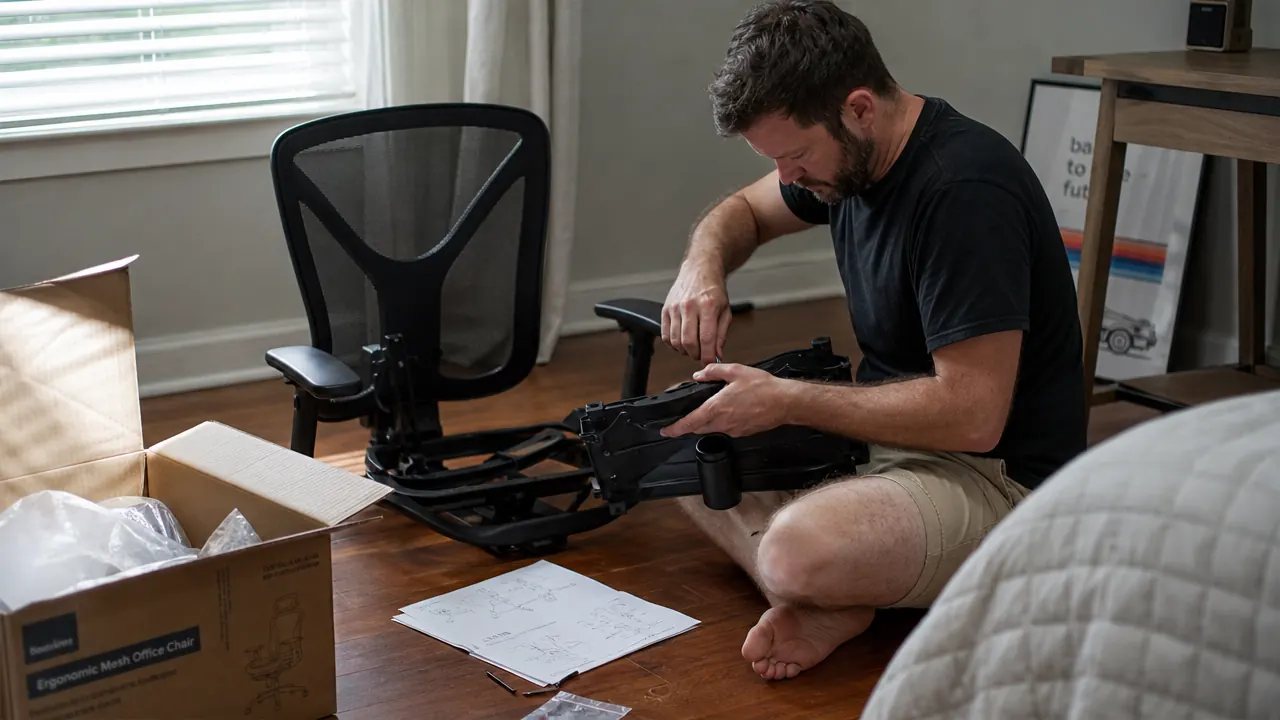
Let me tell you what the product listing does not show you. It does not show you the 70-minute assembly on a Sunday afternoon with a seven-page instruction booklet that skips steps between diagrams. It does not mention that the seat cushion will feel like sitting on a park bench for the first ten days. It does not tell you why about one in five buyers sends it back, or what makes the other four keep it for years. I bought the GABRYLLY ergonomic mesh chair to replace a mid-grade task chair that had gone soft at the seat and noisy at the cylinder. I tested it hard over several months. This is the full picture.
Quick context: I work from home and put in around seven to eight hours per sitting day at a standard height desk. I am 5'10", 188 pounds, and I tend to run warm, which made the mesh back particularly relevant to me. I also have a mild forward-head posture from years of laptop use, which makes the headrest situation something I noticed immediately and kept watching.
The Quick Verdict
A legitimately well-engineered chair for home-office workers who sit long hours upright, but the assembly is trickier than advertised, the seat cushion demands patience, and the headrest is genuinely hit-or-miss depending on your proportions.
Amazon Check Today's Price →If your current chair is making your back hurt before 2 PM, the problem almost certainly is the chair.
The GABRYLLY has a 4.5-star rating across more than 1,470 verified buyers and is backed by a manufacturer warranty. Check the current price on Amazon and confirm your size before ordering.
Amazon Check Today's Price on Amazon →Assembly: The Part That Trips People Up
The chair ships in a single box weighing around 55 pounds. Getting it out alone is a two-hand job, and the packaging is tight enough that pulling the components out in order matters. The base, casters, gas cylinder, seat, and back are separate. The armrest towers attach to the seat before you join the back, and this is where I see most people in the review sections go wrong: they attach the back to the seat mechanism first and then realize the armrest bolts are inaccessible.
The instruction booklet uses numbered diagrams with no written steps. For most stages this is fine. The lumbar support attachment is the exception. The lumbar bracket has two points that need to hook into a specific slot on the chair back before you tighten, and the diagram makes it look like a simple push when it actually requires holding the bracket at a 15-degree angle and pressing upward while engaging the clip. I spent about twelve minutes on this step alone. Once I understood the motion it was straightforward, but the first attempt had me convinced I had a defective bracket.
Total assembly time for me was 68 minutes. Most people estimate 45 to 90 minutes. If you have a drill with a Phillips bit you can cut that down. The hex key included works but is slow. Worth mentioning: the hardware bag is organized by step with labeled compartments, which is genuinely thoughtful and saved me from sorting through a pile of identical-looking bolts.
The First Two Weeks: What Nobody Prepares You For
The seat cushion is dense high-resilience foam. GABRYLLY is upfront that this is a design choice for long-term support, and they are right that it holds its shape over time. But on day one, if you are coming from a softer padded chair, your sit bones will feel it. I described it to my partner as sitting on a firm yoga block covered in fabric. Not painful, but noticeable in a way that made me check Amazon's return window twice.
By day eight, I stopped noticing the cushion at all. By day fourteen, I found myself sitting longer without shifting weight the way I used to in my old chair, which suggests the support was actually working even if the initial firmness was jarring. The break-in is real and it is roughly ten to fourteen days for most people. If you return the chair in the first week based on seat feel, you are probably making a mistake.
The back recline also loosened up slightly over the first three weeks. Out of the box it felt stiff and the tilt tension knob needed several full turns to get to my preferred resistance. After a few weeks of daily use, the range of motion felt more natural. This is normal for chairs with new tilt mechanisms, not a defect.
Why Some People Return It (And Whether Those Reasons Apply to You)
Looking at the critical reviews, most returns cluster around three specific complaints. The first is seat cushion firmness, which I just covered. The second is the headrest, which I will get into below. The third is fit for smaller body types. The GABRYLLY is marketed as a Big and Tall chair rated to 400 pounds. The seat pan is wider than many ergonomic chairs, at roughly 20 inches across. If you are petite or under about 5'4", you may find the seat too deep from front to back, which forces you into a position where the lumbar support hits the wrong part of your back.
A fourth less-common complaint is about the armrests: a small number of buyers report that the pivot mechanism feels loose right out of the box. I did not experience this, but enough reviews mention it that it is worth noting. If yours arrive with noticeable armrest wobble, contact GABRYLLY support before doing a full return. From what I have seen, they resolve hardware issues quickly.
One thing that does not show up in many returns but surprised me: the chair is taller than most chairs. The back extends to roughly 54 inches total height at its highest. In a room with low shelving above the desk area, this can be a real consideration. Measure your clearance before ordering.
The Mesh-vs-Cushion Reality
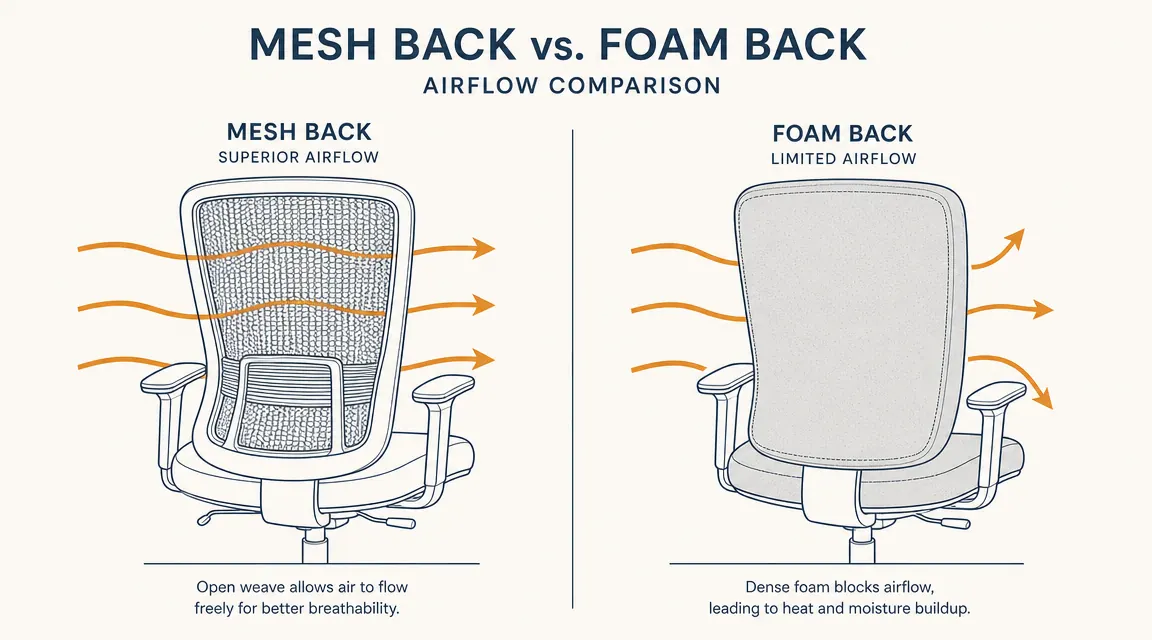
There is a persistent myth in chair shopping that mesh automatically equals comfort. The GABRYLLY illustrates why that is incomplete. The back is full mesh, the seat is foam-padded fabric. This is actually the right design for most people. Full mesh seats can be uncomfortable for long sits because there is no cushioning and the mesh pattern can create pressure points on the backs of the thighs. The hybrid approach, mesh where your back needs airflow, foam where your weight needs distributed support, is what most quality ergonomic chairs use.
The mesh back on the GABRYLLY is woven tighter than some competitors, which means it has slightly less visual transparency but more structural integrity. When you lean back, the mesh flexes to follow your spine without feeling like it is going to tear or overstretch. After months of use, the mesh shows no sagging or deformation that I can detect. For comparison, I had a cheaper mesh chair a few years ago where the back had developed a noticeable droop by month four. This one has not.
By day fourteen I found myself sitting longer without shifting weight. The break-in is real, but so is what comes after it.
The Headrest: Honest Accounting
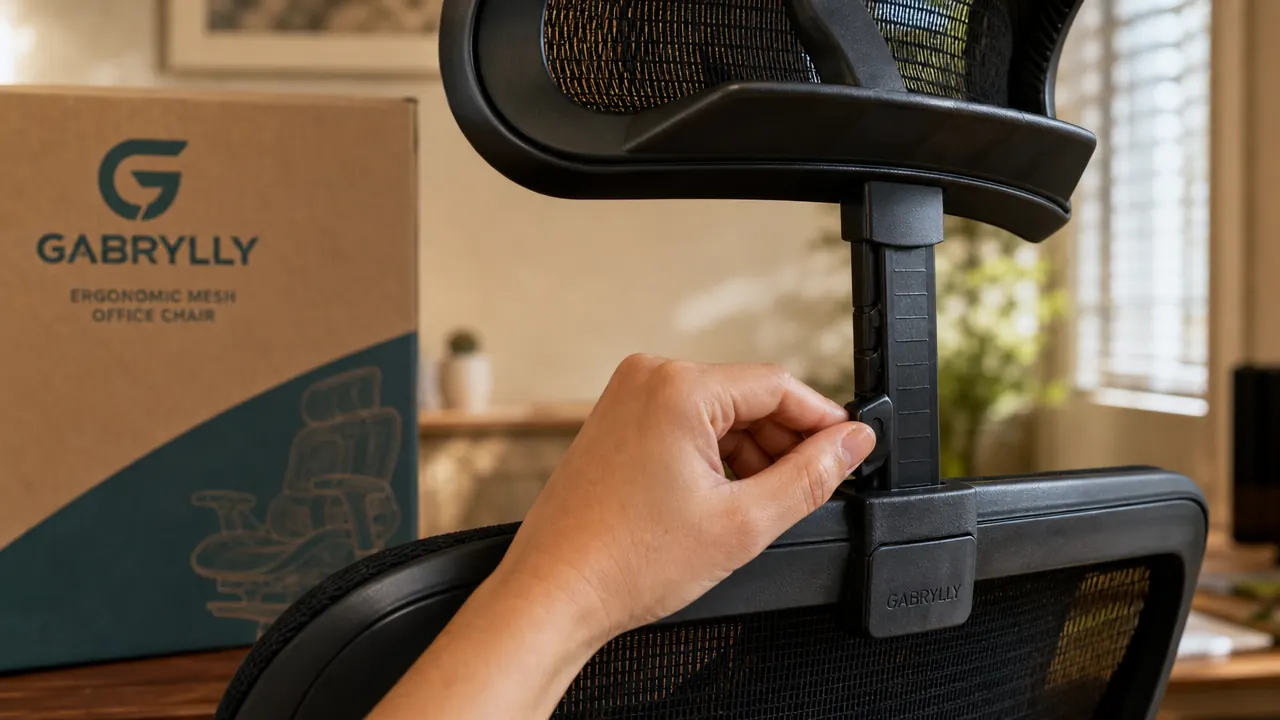
The headrest is the feature that divides buyers more than anything else. Here is how it actually works: there is a post that telescopes up and down using a side-button click-lock system with fixed height positions at roughly one-inch intervals. The headrest pad itself tilts forward and back via a separate friction-based mechanism. You push it to the angle you want and it holds there.
The problem is the step-based height adjustment. If your natural resting head position when seated upright falls between two of the fixed stops, the headrest either sits slightly too low and rests on the back of your neck or slightly too high and misses contact altogether. For my head position during focused keyboard work, I land between the second and third stops. I lean back to recline and the headrest contacts correctly. Forward-focused, it does not reach me.
People taller than 6'0" tend to report the headrest working well because their natural head position aligns with the upper stops. People in the 5'6" to 5'10" range have the most variable experiences. If the headrest matters a lot to you, and you spend time reclined on calls, it will work. If you are primarily upright at a keyboard and want consistent head contact, you may find yourself ignoring it entirely. That is not a dealbreaker, but it is worth knowing before you factor it into your buying decision.

Lumbar Support: The Actual Core Value
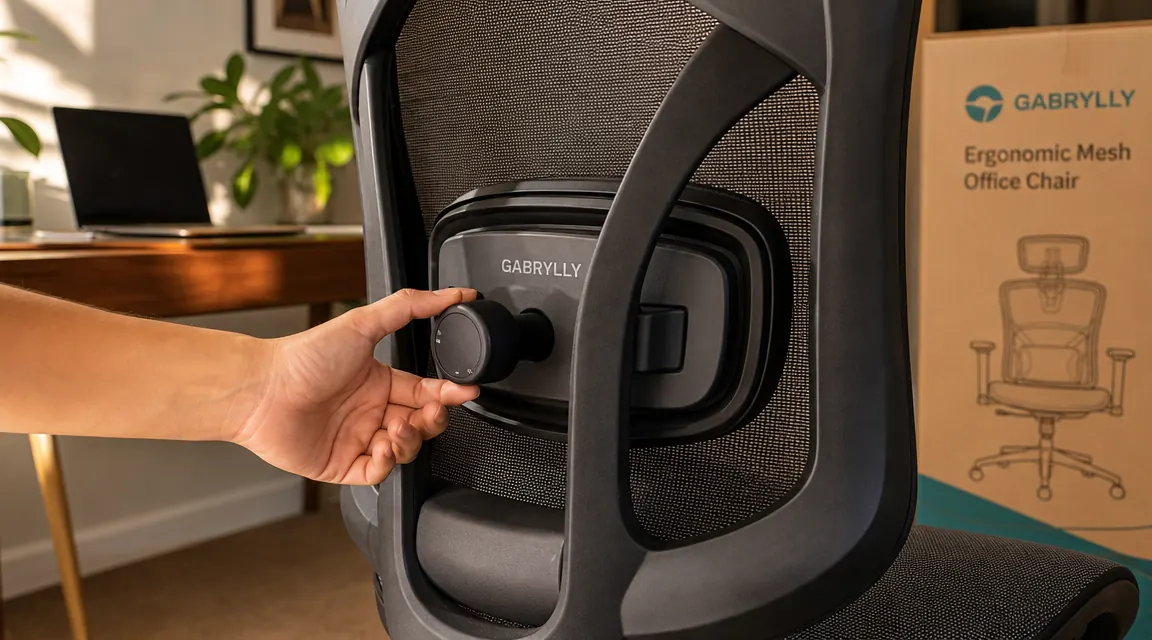
If the headrest is the most-discussed disappointment, the lumbar support is the most-discussed reason people stay. The lumbar pad is a separate piece attached to the lower back frame, adjustable in both depth and vertical position. The depth knob goes from a gentle reminder to a firm forward push. The vertical travel covers a range wide enough that most torso lengths can find a useful position.
What makes this system functional rather than decorative is the combination of adjustments. Many chairs have lumbar support that you cannot move, so it either lands in the right spot for your spine or it does not. The GABRYLLY gives you enough control that you can tune it to your build. I keep the depth at roughly 60 percent, right around the L4-L5 area. On days when I am writing for long stretches, I nudge it slightly deeper after the first hour. This kind of interaction with the chair is what distinguishes a working ergonomic setup from a piece of furniture you happen to sit in.
One note: the depth knob is the weakest-feeling component on the chair. The plastic has a slightly hollow sound when you turn it, and the click-detents are soft. It functions correctly, but it does not feel as substantial as the armrest hardware or the recline mechanism. For a chair at this price, it is a minor but noticeable inconsistency in build quality.
The 3D Armrests in Practice
Height-adjustable armrests are standard. Forward-back sliding armrests are less common at this price. Armrests that also pivot inward are genuinely useful and not widely offered in the budget range. The GABRYLLY has all three, and the combination matters in a practical way: if your keyboard sits below desk height on a tray, being able to push the armrests forward and angle them slightly inward lets your forearms rest without your shoulders rolling forward. That shoulder position is where a lot of remote workers accumulate tension across a long day.
The armrests lock solidly at their height positions. The forward-back slide is slightly stiff and requires intentional repositioning rather than casual adjustment, which I actually prefer since it means they stay where I set them. The pivot mechanism works smoothly and holds position under normal forearm resting pressure. If you tend to lean heavily on one armrest with your elbow, the pivot may shift slightly under that load. It is not a structural issue; it is just not rated for high side-loading.
What I Liked
- Lumbar support is adjustable in both depth and height, making it genuinely adaptable to different torso lengths
- 3D armrests with height, forward-back, and inward pivot give real control over shoulder position
- Mesh back ventilates well during warm-weather work without requiring a desk fan
- Seat foam holds its shape over extended use and does not compress into a flat slab over time
- Tilt tension and recline are smooth once broken in, good range for calls and focused work
- Hardware bag is sorted by assembly step, which reduces confusion during setup
- 400-pound weight rating and broad seat pan make it a rare ergonomic option for larger-framed users
Where It Falls Short
- Seat cushion firmness requires a ten-to-fourteen day break-in that some buyers mistake for a product defect
- Headrest step-lock system leaves many users in the 5'6" to 5'10" range unable to find an ideal upright contact position
- Assembly instructions are diagram-only; the lumbar bracket step is genuinely confusing on first attempt
- Seat pan depth may be too generous for users under 5'4", pushing them out of proper lumbar contact
- Lumbar depth knob has a noticeably cheaper feel than the rest of the chair's hardware
Who This Is For
The GABRYLLY rewards people who sit upright at a desk for six or more hours a day and want real adjustability rather than a chair that looks ergonomic in a photo. It suits home office workers in the 5'7" to 6'3" height range particularly well, where the lumbar geometry tends to land correctly and the headrest actually reaches. It is a good match for people who run warm or work in rooms that do not have great airflow, since the mesh back makes a noticeable difference over a full workday. It is also one of the few chairs in this price range that makes practical sense for people over 220 pounds, given the Big and Tall dimensions and the 400-pound capacity. If you want to see how it stacks up against a competing option before deciding, the GABRYLLY vs FlexiSpot head-to-head covers the comparison in detail.
Who Should Skip It
Skip this chair if you want soft cushioning from day one and have no interest in a break-in period. Skip it if you are under 5'4" and plan to rely on lumbar contact throughout the day, because the seat depth may place you out of ideal position. Skip it if you primarily work reclined with a laptop on your lap, since the lumbar support design is built around an upright posture and will not help you in a reclined position. Skip it if the headrest is a non-negotiable feature and you fall in the mid-height range where the fixed stops may not line up. And if you are not confident in a 60-to-90-minute assembly process, consider whether a local furniture store with a configured model on the floor makes more sense for you. Before you finalize any chair setup, it is also worth reading through how to set up an ergonomic chair so it actually does its job, because even a well-engineered chair delivers poor results when the adjustments are left at factory defaults.
The lumbar and armrests alone justify the price for anyone sitting more than six hours a day. The headrest is a bonus, not a reason to buy or skip.
More than 1,470 buyers have rated the GABRYLLY at 4.5 stars. Check the current Amazon price and make sure your preferred size is in stock before you decide.
Amazon Check Today's Price on Amazon →